Layout and Grade Check
We stake the footprint, run string lines and check existing grades against your plan. Any slope or drainage issue gets flagged before we build, not after the pour. This step usually takes 30 to 45 minutes on a residential job.
Concrete Formwork Chula Vista CA is the wood, steel and bracing system that holds wet concrete in its exact shape until it cures. We build forms for driveways, foundations, retaining walls and slabs across San Diego County. If your pour has to come out level, square and crack-free, the forming is where that gets decided. We handle layout, bracing and stripping so the finished concrete matches the plan.
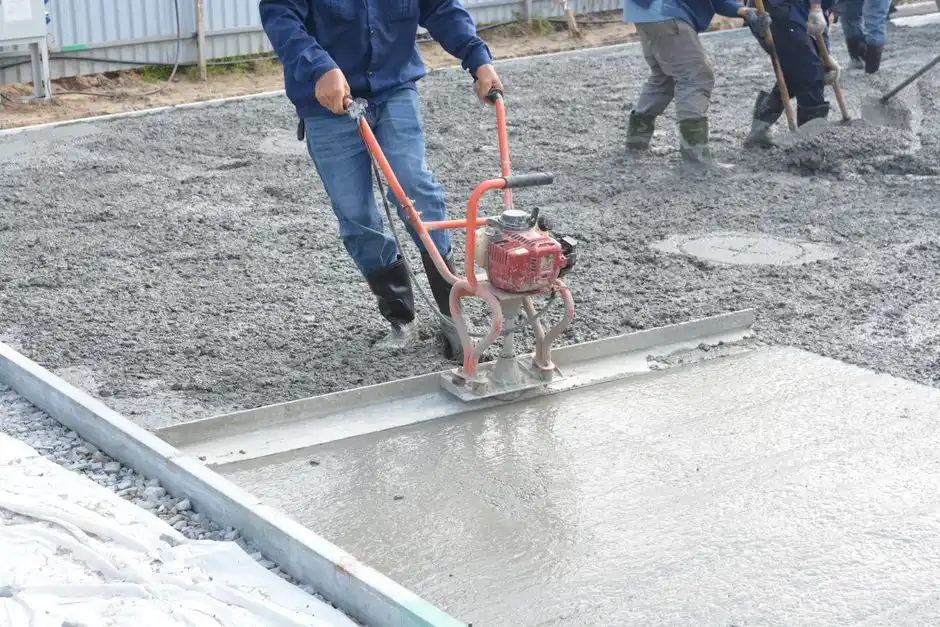
Concrete formwork is the temporary mold that gives poured concrete its shape, depth and edge line. We lay out the footprint, set form boards or steel panels, drive stakes, brace the sides and check everything with a level and string line before a single yard of mud shows up. Get the forms wrong and you get bulges, wavy edges, low spots and wasted concrete. Get them right and the slab, wall or footing comes out flat, square and ready to finish. That is the whole job in one sentence.
Chula Vista sits on a mix of clay-heavy soils and old bay fill, and that ground moves when it gets wet. In Eastlake and Otay Ranch we see slabs poured against slopes that need taller forms and more bracing than a flat lot in Castle Park. A lot of homes here were built between the 1960s and the 2000s, so we are often forming additions, patio extensions and replacement walkways that have to tie into existing grades. If you are pricing concrete formwork installation Chula Vista homeowners can trust, the forming is the part that decides whether the pour holds.
Our forming price covers layout, form building, bracing, release agent, stripping and haul-off. Reinforcement, concrete, finishing and sealing are quoted separately so you can see what each part costs. Here is what shows up in a standard forming scope.
We stake the footprint, run string lines and check existing grades against your plan. Any slope or drainage issue gets flagged before we build, not after the pour. This step usually takes 30 to 45 minutes on a residential job.
We cut and set 2x4 or 2x6 lumber, or steel panels for tall walls, and drive stakes every 2 to 3 feet. Backs get braced to handle the head pressure of your specific pour depth, with whalers added on walls over 4 feet.
Every panel gets a coat of form release agent before the pour so the concrete face comes out clean and the forms strip without tearing the surface. This is what keeps form marks and pull-outs off your finished slab.
If your project needs a city or county inspection before the pour, we meet the inspector on site and walk the forms with them. We fix anything they flag the same day so your pour date does not slip.
Forms come off on schedule, 24 to 48 hours for flatwork and 3 to 7 days for walls. We pull stakes, knock off residue, backfill the edges and remove every board and stake from your property.
We walk the site with you, check grades, note utilities and measure the footprint. Layout gets marked with stakes and string, and we confirm the dimensions against your plan or your rough sketch. This visit usually takes 30 to 45 minutes and you get a written price before we leave.
We cut and set 2x4 or 2x6 lumber, or steel panels for tall walls, then drive stakes every 2 to 3 feet and brace the backside. Rebar or wire mesh goes in at this stage and gets tied so it stays in the middle of the slab. A typical residential form set takes one full day.
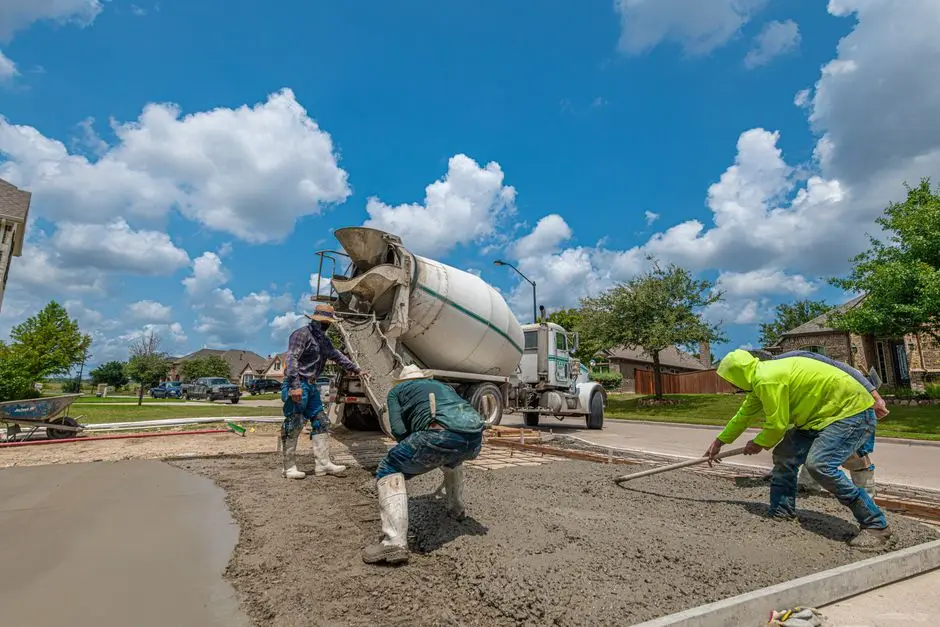
Before the truck rolls we check depth, slope, square and bracing, then spray a form release agent on the panels. If your project needs a city inspection, we meet the inspector on site. We also stage the pour so the concrete pump or chute can reach every corner without dragging a hose over fresh forms.
Concrete goes in and gets worked with a vibrator to knock out air pockets, then a screed and bull float bring it to grade. We watch the forms the whole time for any movement. On a 400 square foot slab the pour itself runs 45 minutes to an hour and a half, depending on access.
Forms come off once the concrete is hard enough to hold its own shape, usually 24 to 48 hours for flatwork and 3 to 7 days for walls. We pull stakes, knock off the release agent residue, backfill around the edges and haul everything away. You get a finished surface and a clean yard.
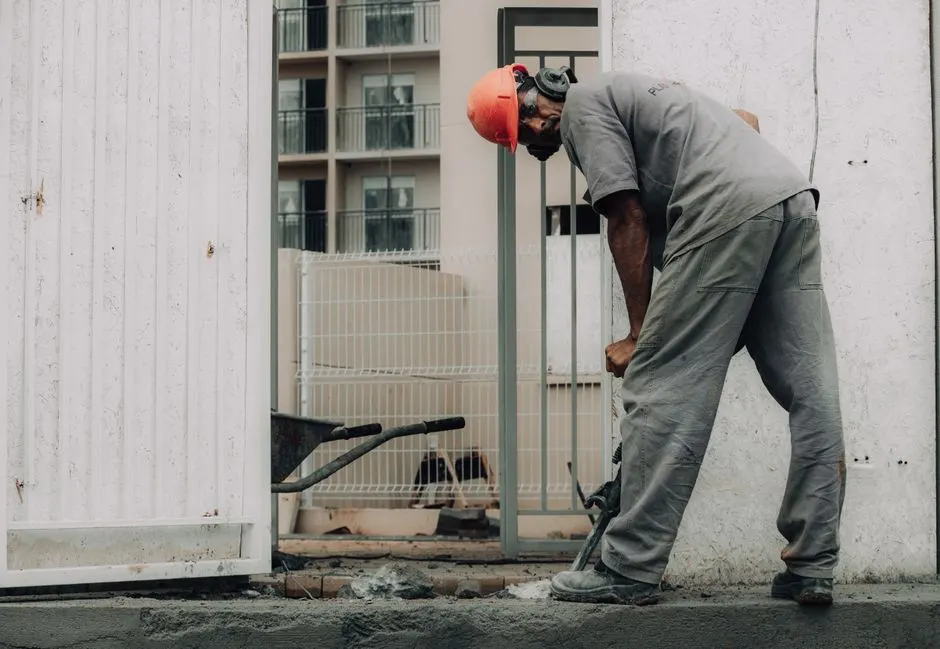
We walk the site with you, check grades, note utilities and measure the footprint. Layout gets marked with stakes and string, and we confirm the dimensions against your plan or your rough sketch. This visit usually takes 30 to 45 minutes and you get a written price before we leave.
The mixer keeps small batches consistent on site, and the pump gets mud to backyard forms that a truck chute cannot reach. On tight lots in Bonita and Sunbow the pump saves a whole day of wheelbarrow work.
The bull float opens the surface and pushes aggregate down right after screeding. The power trowel brings up a hard, dense finish on garage slabs and shop floors where a smooth surface matters.
The saw cuts control joints once the slab sets, usually within 6 to 12 hours. The rebar cutter keeps tied steel at exact lengths so reinforcement sits at mid-depth with proper cover.
The vibrator knocks air pockets out of the concrete as it fills the forms, which prevents honeycombing. The screed strikes the surface to grade so the slab comes out flat and true.
The edger rounds the slab edge so it does not chip under foot traffic. The groover cuts clean control joints at the surface to direct where the concrete cracks, which keeps cracks out of sight.
Anchor bolts, hold-downs and post bases from Simpson Strong-Tie and Hilti get set into the forms before the pour. Getting them in the right spot at the forming stage saves drilling into cured concrete later.
A 420 square foot patio sloped toward the house, so every winter rain sent water against the stucco and the slab had two long cracks running off the corner. The old forms had been set flat with no fall and no control joints.
After: We broke out the slab, recompacted the base and set new forms to a 1.5 percent fall away from the foundation. Wire mesh went in at mid-depth, control joints were cut at 10 foot spacing, and the new slab has stayed crack-free and dry for two seasons.
Book this service →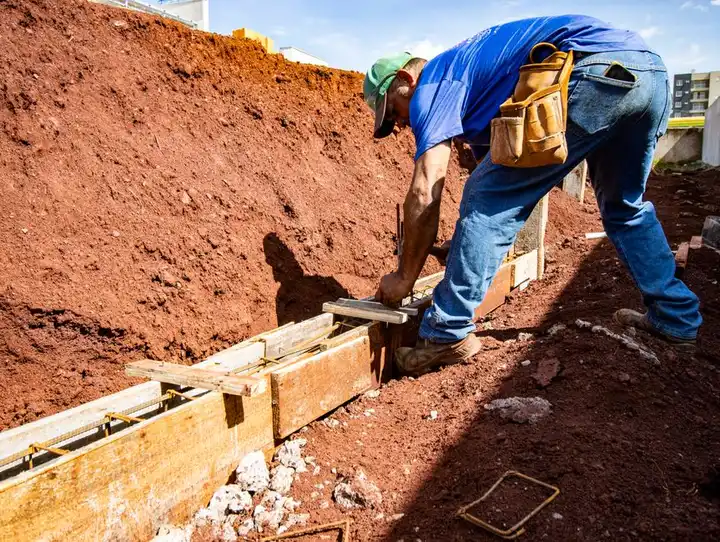
A homeowner needed footings and stem walls formed for a 320 square foot room addition. The lot had a slight cross-slope, and the first quote came in with no bracing plan for the stem wall pour.
After: We formed the footings to the engineered dimensions, set anchor bolts to plan and braced the stem walls with steel panels and whalers. The inspector signed off on the first visit, and the pour went in one continuous pass with no blowouts.
Book this service →
A 60 foot walkway at a small apartment building had a cracked, heaved section near the entry that sat almost an inch above the rest. Two tenants had already tripped, and the property manager needed it fixed without tearing out the whole path.
After: We cut out the bad 40 square foot section, recompacted the base and formed the patch to match the surrounding slab depth exactly. Rebar was tied into the existing steel, and control joints were cut the next day. The walkway is flush and level end to end.
Book this service →Most concrete failures we get called about trace back to the forming stage. Here are the ones we see most in Chula Vista and how we keep them from happening on your pour.
Ask a pro →We brace to the actual head pressure of your wall depth, not a rule of thumb, and add whalers on anything over 4 feet. Stakes get driven deep and checked for plumb right before the truck arrives. On clay soils in Rancho del Rey we go deeper still so nothing lifts.
We set forms to a string line and check straightness with a screed board before the pour. Stakes every 2 to 3 feet hold the line under the weight of the mud. The result is an edge that reads sharp from the street.
We set patio and walkway forms to a 1 to 2 percent fall away from the structure and verify it with a level. On tight lots in Castle Park and Lauderbach we adjust the whole grade so water still reaches the street.
We vibrate the concrete as it goes in to knock out air, and we stage the pour so it runs continuous. Forms stay braced and untouched during the pour so nothing shifts and creates a cold joint.
$3 - $7 per square foot for forming alone; $6 - $14 per square foot for a full formed and poured slab
Forming on its own runs about $3 to $7 per square foot in 2026, and a full formed-and-poured slab lands between $6 and $14 per square foot depending on thickness, access and finish. A 400 square foot driveway typically comes in around $2,400 to $5,600. We quote forming, reinforcement, concrete, finishing and sealing as separate lines so you can see exactly what you are paying for. Our concrete formwork services Chula Vista California customers get a written price the same day we walk the site, with no ballpark guessing over the phone.
Forming is the cheapest part of the job to get right and the most expensive to get wrong. A blown form or a wavy edge means demo, re-pour and a schedule slip that costs far more than the bracing would have. Pay for the forms once and the concrete holds its shape for decades.
A 4 inch patio slab needs shorter forms and less bracing than a 6 inch driveway rated for vehicles. Thicker pours also use more concrete, so depth drives both the forming labor and the material cost.
Get a quote ↗Retaining walls and stem walls over 4 feet need whalers, stronger stakes and steel panels to resist head pressure. That extra bracing is real labor and real material, and it shows up in the price.
Get a quote ↗A backyard pour that a truck cannot reach needs a concrete pump, which adds cost but saves hours of wheelbarrow work. Steep lots also need taller forms on the low side and more time to set them plumb.
Get a quote ↗Rebar and wire mesh get tied after the forms are set, and heavier reinforcement takes longer to place. Proper cover and chairs add a little labor but prevent the rust and cracking that come from steel sitting too close to the surface.
Get a quote ↗“We needed a 480 square foot patio poured on a slope behind the house, and two other guys told us it would just pool water. This crew set the forms with a real fall away from the house and braced everything tight. Pour went clean, forms came off in two days, and the patio drains perfectly through last winter's rain. No puddles, no cracks.”
Marisol R.Homeowner, Eastlake
✓ Verified“They formed and poured a foundation for our room addition. The inspector signed off on the first visit, which I did not expect. Forms were plumb, anchor bolts were set right, and they stripped and hauled everything off on schedule. Price came in where they quoted it, no surprise add-ons at the end.”
Danny K.Homeowner, Otay Ranch
✓ Verified“We had a cracked walkway section that was a trip hazard, and they formed the replacement to match the existing slab depth so there was no lip. Tied the rebar in, poured, and cut control joints the next day. Tenants stopped complaining about the uneven step. Clean work and they cleaned up after themselves.”
Priya S.Property Manager, Downtown Chula Vista
✓ VerifiedForming usually runs $3 to $7 per square foot on its own, or $6 to $14 per square foot when it is bundled into a full formed-and-poured slab. A 400 square foot driveway typically lands between $2,400 and $5,600 total. Taller walls, steep grades and tight access push the number up because they need more bracing and more labor hours.
Most residential form sets take one full day, and the pour happens the next. Stripping runs 24 to 48 hours later for flatwork and 3 to 7 days for walls. A simple patio slab can be formed in half a day, while a foundation with multiple footings and stem walls can take 2 to 3 days of forming before the first truck shows up.
The right contractor is the one who braces to real pour pressure, checks slope with a level, and strips on schedule instead of leaving lumber in your yard. We have been forming concrete here since 2018, hold a CSLB license, and carry OSHA 30 trained leads. Ask any contractor for their license number and a written price before you commit.
For flatwork like driveways and patios, 2x4 or 2x6 lumber with stakes every 2 to 3 feet handles almost everything. Taller retaining walls and foundation stem walls do better with steel panels or plywood backed by whalers, because the head pressure is much higher. On clay soils common in Eastlake and Rancho del Rey we also set deeper stakes so the forms do not lift.
We are licensed, insured and have been forming concrete in Chula Vista since 2018. Call us and we will walk your site, check your grades and hand you a written price the same day. Straight answers, clean forms, concrete that holds its shape.
Get Free Estimate +16199843356 →Call us at +1 (619) 984-3356 and we will get you on the schedule. Most estimates go out the same day, and we answer questions about thickness, finish, and cure times before you commit to anything. Reach us by phone or email, Monday through Friday, 8:00 to 18:00.