Demo and Haul-Off
We saw-cut, break out and remove the old walkway, then haul the debris off site. That includes the concrete, the old base and any root or soil we have to dig out to get to solid ground. You are not left with a pile in the driveway.
Concrete Walkways Chula Vista CA means a path that drains, holds its slope and still looks clean after a decade of foot traffic. We pour residential and commercial walkways across San Diego County, from a single side-yard path in Castle Park to full HOA runs in Eastlake. If your old walkway is cracked, sunken or slick, we tear it out and replace it. Free on-site estimate, clear price before we break ground.
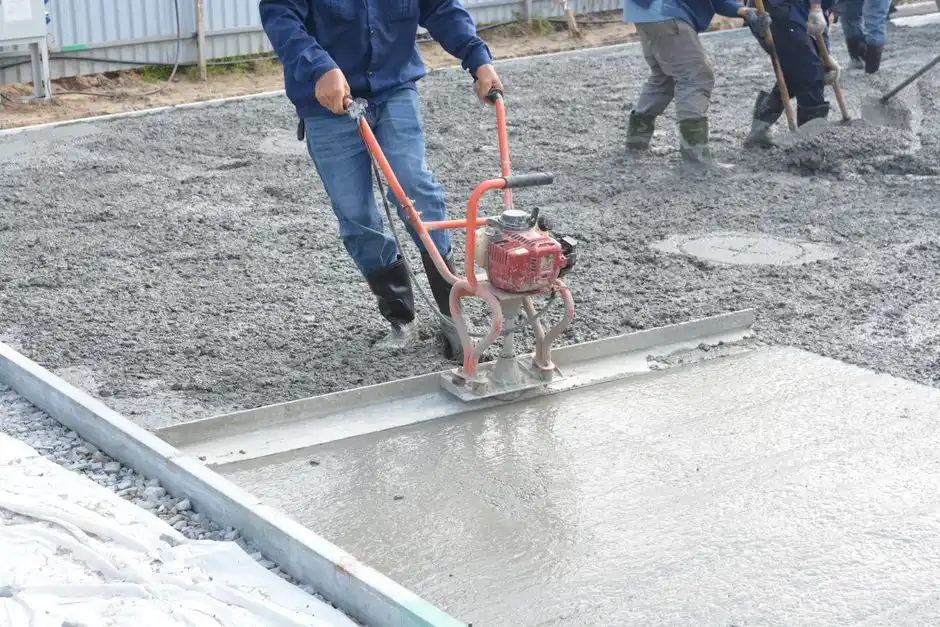
Concrete Walkways Chula Vista CA is poured flatwork that carries foot traffic from your driveway, patio or front door to the street, garden or gate, and it is the flatwork most homeowners notice first. A proper walkway is not just a ribbon of gray. It is a 3,000 to 4,000 psi mix, a compacted base, rebar or wire mesh set on chairs, a 1/4-inch-per-foot slope away from the house, and control joints cut every 4 to 6 feet so the concrete cracks where you want it to. We form, pour, screed, float and finish each run with a bull float, edger and groover, then cure it under a curing compound so it hits full strength instead of drying out in the sun.
Chula Vista walkways take a beating that inland concrete does not. Marine air off the bay, morning dew, and summer heat swings push moisture in and out of the slab, and that is what drives cracking, spalling and efflorescence on older paths. Tree roots in Bonita and Rancho del Rey lift panels, and winter rain pools wherever the original pour lost its grade. If you are pricing concrete walkway installation Chula Vista homeowners actually keep, you want a contractor who builds the base and the drainage first. We have been pouring in this city since 2018, and we know which streets drain and which ones do not.
Every walkway quote we write covers the full job from tear-out to final cleanup, so you are not paying for extras halfway through. Here is what is standard on a typical Chula Vista walkway, and what we price separately when your yard needs it.
We saw-cut, break out and remove the old walkway, then haul the debris off site. That includes the concrete, the old base and any root or soil we have to dig out to get to solid ground. You are not left with a pile in the driveway.
We excavate to depth, compact the subgrade, and import and compact base rock where the soil is soft or expansive. This is the step cheap crews skip, and it is the reason their walkways crack within two winters.
Forms set the line and slope, and we place rebar or wire mesh on chairs at mid-slab depth. Expansion joints go in where the walkway meets the driveway, steps or house, so movement does not tear the new concrete.
We pour a 4-inch walkway at 3,000 to 4,000 psi, screed and float it, then finish with the texture you chose. Control joints are cut every 4 to 6 feet so cracks form where they are supposed to, not across the middle of a panel.
We apply curing compound so the concrete reaches full strength, keep traffic off for 24 to 48 hours, and clean the site before we leave. Final walkthrough with you, plus written care instructions for the first 28 days.
We walk the route with you, shoot elevations, and check where water currently runs. You get a written scope and a firm price the same day in most cases. Typical visit runs 30 to 45 minutes, and we flag anything underground that could change the plan, like irrigation lines or old root systems.
Old concrete comes out with a concrete saw and a skid-steer breaker, and we haul it off. We excavate 6 to 8 inches deep, then compact the subgrade in lifts. On soft or expansive soil we bring in base rock and re-compact until it passes. Most residential tear-outs take one to two days.
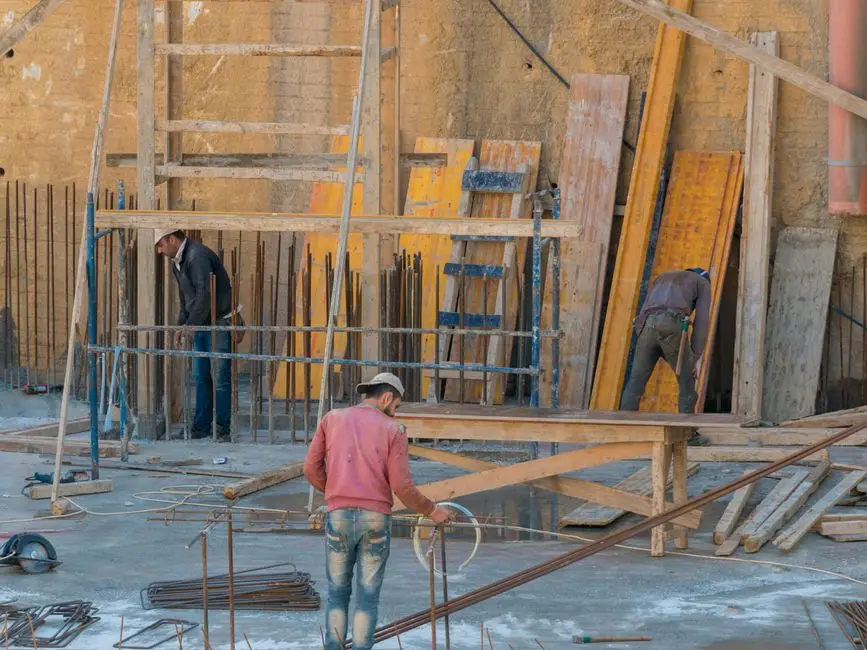
We set forms to the finished grade, then place rebar or wire mesh on chairs so steel sits mid-slab instead of on the dirt. Simpson Strong-Tie and Dayton Superior form hardware keep the run straight and the joints tight. This stage is where the walkway's final slope is locked in.
The truck backs up or we pump it in with a concrete pump when access is tight. We screed, bull float, edge and groove, then cut control joints every 4 to 6 feet. A typical 300-square-foot walkway pours and finishes in a single morning, with the crew on site 4 to 6 hours.
We apply curing compound and keep foot traffic off for 24 to 48 hours. Full cure takes 28 days, but you can walk on it the next day and park equipment on it after a week. We do a final walkthrough with you, hose it down, and hand over care instructions.
We walk the route with you, shoot elevations, and check where water currently runs. You get a written scope and a firm price the same day in most cases. Typical visit runs 30 to 45 minutes, and we flag anything underground that could change the plan, like irrigation lines or old root systems.
We use an on-site mixer for small pours and a concrete pump when the backyard has no truck access. Pumping keeps the pour continuous instead of stopping and starting, which is what causes cold joints and weak spots.
The bull float opens the surface and pushes aggregate down after screeding. On larger commercial walkways a power trowel gives a denser, harder finish. Both are worked at the right time, not rushed.
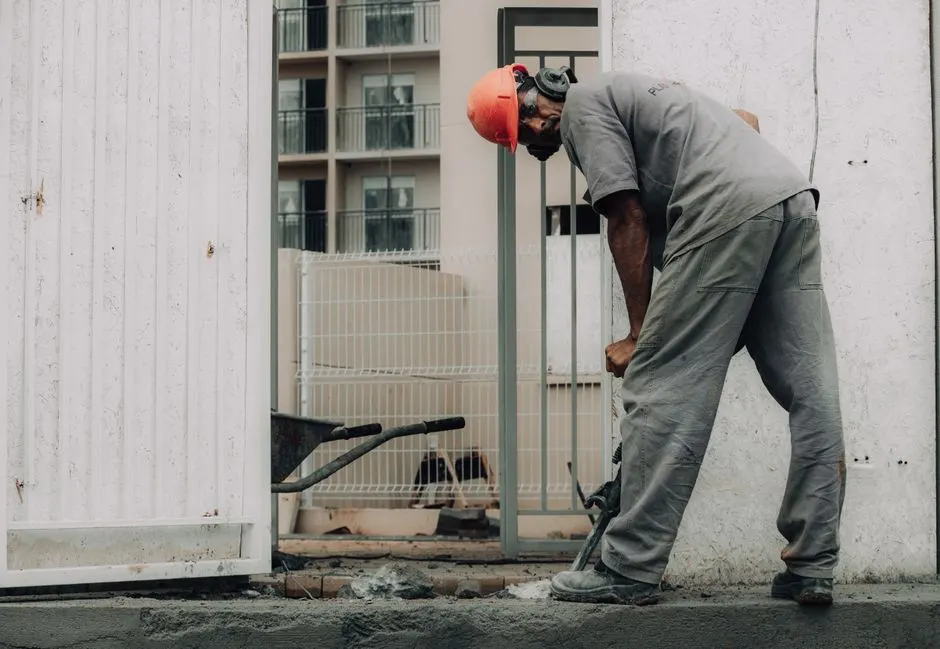
We cut control joints with a concrete saw or a hand groover every 4 to 6 feet. Joints control where the concrete cracks, so you get clean lines instead of random cracks across the walkway.
The rebar cutter keeps steel lengths accurate, and the concrete vibrator removes air pockets around the steel and forms. That prevents honeycombing and voids that weaken the slab over time.
The screed levels the fresh concrete to the form height, and the edger rounds the walkway edges so they do not chip. A properly edged walkway holds its shape for years instead of spalling at the border.
For coring, doweling and precision cuts we use Hilti and Bosch saws with dust control. Clean cuts matter where a new walkway ties into existing concrete or a foundation wall.
A 1960s walkway had settled about 2 inches toward the house, with three cracked panels and water pooling against the foundation every winter. The original base was clay with no base rock, and tree roots had lifted two sections.
After: We tore out 220 square feet, over-excavated to 8 inches, imported and compacted base rock, and re-poured a 4-inch walkway with rebar and joints every 5 feet. The new slope runs 1/4 inch per foot away from the house.
Book this service →A 400-foot community walkway had cross slopes over 4 percent, cracked panels at the root zones, and a failing edge that tripped residents. The last inspection had flagged three non-compliant sections.
After: We replaced 400 linear feet in phases, corrected the cross slope to 2 percent, rebuilt the base, and re-poured with ADA-compliant running slopes. The walkway passed inspection on the first visit with slump and cylinder documentation on file.
Book this service →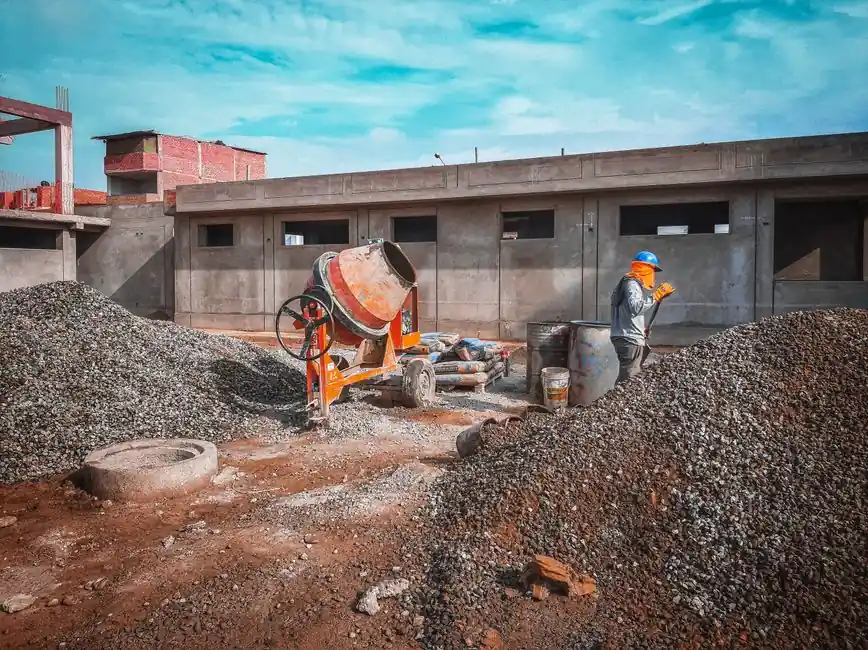
A sloped backyard had no path from the patio to a lower fire pit area, and the grade was eroding where the family walked. The homeowner wanted something that matched the existing stamped patio.
After: We built a 24-inch retaining wall to hold the grade, poured 6 code-compliant steps, and ran 90 feet of stamped walkway in the same pattern and color as the patio. The whole run drains to a yard drain at the low end.
Book this service →Most walkway calls we get are one of four things: it cracked, it sank, it is slick, or water is running the wrong way. Here is what causes each one and how we fix it for good.
Ask a pro →We cut out the failed panels, dowel into the sound concrete, and re-pour with a corrected mix and joint layout. If the whole run is failing, replacement is cheaper than patching panel by panel, and we tell you which one makes sense.
If the slab is solid, we lift it with concrete leveling and mudjacking and restore the original grade for a fraction of replacement cost. If the base is gone, we tear out and re-pour with proper compaction underneath.
We re-grade the run away from the house, add a drainage tie-in, and finish with a broom or exposed aggregate texture that grips when wet. On commercial paths we hold ADA cross-slope so water leaves the walkway instead of sitting on it.
We clean the surface, treat the efflorescence, and seal the walkway with a penetrating sealer that slows moisture migration. If the finish is too far gone, resurfacing gives you a fresh surface without a full tear-out.
$2,400 - $4,800 for a typical 300 sq ft residential walkway; $8 - $16 per square foot depending on scope
Concrete walkway installation Chula Vista pricing depends on square footage, access, tear-out and finish. In 2026, most residential walkways in this area run $8 to $16 per square foot, and a typical 300-square-foot path lands between $2,400 and $4,800. Decorative finishes, tight access, steep grading and old concrete removal push the number up. Plain broom-finish replacement on flat ground sits at the low end. We give you a firm, itemized price after we measure, and we tell you what is driving the cost so you can decide what to keep and what to skip.
A walkway is one of the few home upgrades that lasts 25 to 30 years with almost no maintenance. Poured right, it outlives a wood deck, a gravel path and a paver walkway, and it adds usable, safe access to your yard from day one.
Price scales with area, and a wider walkway costs more per linear foot. A standard 36-inch residential path uses less concrete than a 48-inch commercial run, and the difference shows up directly in material and labor.
Get a quote ↗Removing old concrete adds labor, saw cutting, hauling and dump fees. A walkway that comes out clean and easy costs less than one with rebar, thick sections or root intrusion that has to be cut away.
Get a quote ↗Soft or expansive soil means over-excavation and imported base rock, which adds cost but prevents settling. On stable, well-drained ground the base prep is straightforward and the price stays lower.
Get a quote ↗If a truck cannot reach the pour, we bring in a concrete pump. That adds cost but keeps the pour continuous. Backyard walkways with narrow side yards are the most common pumping jobs we run.
Get a quote ↗“Our old walkway had sunk about two inches and water was running toward the house every winter. They tore it out, brought in base rock, and re-poured with a proper slope. The crew was in and out in three days and cleaned up everything. Six months of rain since and not one puddle against the foundation.”
Marisol R.Homeowner, Eastlake
✓ Verified“We had 400 feet of HOA walkway that was cracked and tripping people. They handled the permit, poured in sections so residents could still get through, and met the ADA slope the inspector wanted. Straight pricing, no surprise change orders, and they finished on the day they said they would.”
Danny K.Property Manager, Otay Ranch
✓ Verified“I wanted a stamped walkway from the driveway to the front door that matched our patio. They showed me samples, matched the color, and the joints line up perfectly with the existing concrete. Neighbors have already asked who did it. Worth every dollar.”
Priya S.Homeowner, Rancho del Rey
✓ VerifiedMost residential concrete walkways in Chula Vista run $8 to $16 per square foot in 2026, so a typical 300-square-foot path lands between $2,400 and $4,800. Tear-out of old concrete, tight access, decorative finishes and steep grading push the number up. Plain broom-finish replacement on flat ground sits at the low end. We give you a firm, itemized price after we measure, not a ballpark over the phone.
A standard residential walkway takes 2 to 4 working days from demo to final walkthrough. Day one is tear-out and excavation, day two is forming and steel, day three is the pour and finish, and day four is joint cutting and cleanup if needed. Larger runs or jobs needing a concrete pump can stretch to a week. You can walk on the new concrete 24 to 48 hours after the pour.
The right contractor is the one who pulls the permit, tests the mix, and shows you the base compaction before the pour. Ask for their CSLB license number, proof of insurance, and two local references. We have poured walkways in Chula Vista since 2018, hold ACI certification on our finishing crews, and warranty our workmanship in writing. Compare quotes, then compare what is actually in the scope.
Most residential walkways on private property do not need a permit if they stay under 30 inches tall and do not sit in a public right-of-way. Anything in the sidewalk easement, any walkway over 30 inches, and all commercial or HOA walkways do require a city permit and inspection. We handle the paperwork and pull the permit when the job needs one, so you are not chasing the city yourself.
We measure, quote and schedule fast, and we show up when we say we will. Licensed, insured and warrantied in writing. Call today and we will get eyes on your walkway this week.
Get Free Estimate +16199843356 →Call us at +1 (619) 984-3356 and we will get you on the schedule. Most estimates go out the same day, and we answer questions about thickness, finish, and cure times before you commit to anything. Reach us by phone or email, Monday through Friday, 8:00 to 18:00.